Buy aerztehaus.eu ?
We are moving the project
aerztehaus.eu .
Are you interested in purchasing the domain
aerztehaus.eu ?
domain@kv-gmbh.de · 0541-91531010
Buy aerztehaus.eu ?
Is ammonia polyprotic or monoprotic?
Ammonia is a monoprotic base, meaning it can donate only one proton (H+) in a chemical reaction. This is because ammonia has only one nitrogen atom that can accept a proton to form the ammonium ion (NH4+). Therefore, ammonia is considered monoprotic. **
What are monoprotic and polyprotic acids?
Monoprotic acids are acids that can donate only one proton (hydrogen ion) per molecule when they dissociate in water. Examples include hydrochloric acid (HCl) and acetic acid (CH3COOH). Polyprotic acids, on the other hand, are acids that can donate more than one proton per molecule when they dissociate in water. Examples include sulfuric acid (H2SO4) and phosphoric acid (H3PO4). **

Similar search terms for Polyprotic
Top-Angebote
Products related to Polyprotic:
-
Skin Doctors Radiance SetPerfect as a gift this Mothers Day, The Youthful Radiance Set from Skin Doctors. The products included in this set work to re-awaken tired skin and achieve a more even and glowing complexion. Set Includes: 1 x Skin Doctors Radiance & Renew 1 x Skin Doctors pH Balancing Cleanser 1 x Skin Doctors Toiletry Bag28,76 £*Shipping: 0,00 £Secure redirect to the provider
-
Skin Doctors Plump 50mlSkin Doctors Antarctilyne Plump is a clinically proven face cream which works to increase your skin's condition within 7 days! It boost skin's collagen levels and protects it from decreasing, maintaining skin's firmness and elasticity for a healthier and youthful appearance!Formulated with triple action skin boosting ingredient Trylagen, the cream is a blend of peptides and proteins to enhance skin's appearance for a brighter fuller complexion.35,62 £*Shipping: 0,00 £Secure redirect to the provider
-
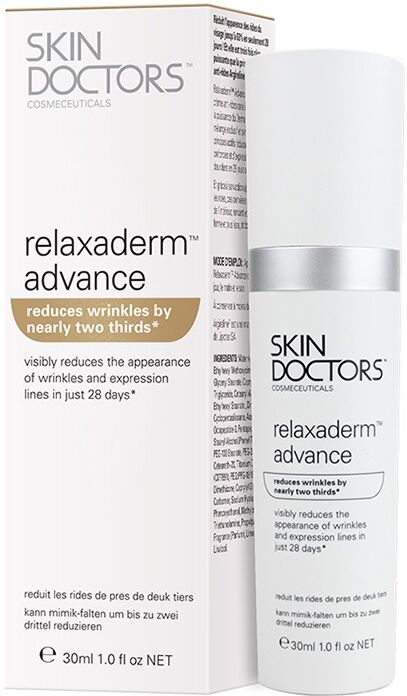
Skin Doctors Advance 30mlSkin Doctors Relaxaderm Advance is an innovative cream which plumps, boosts and firms your skin for a healthier younger appearance. Smoothing the skin and evening out fine lines and wrinkles by relaxing the facial muscles, this cream is a miracle worker! So, how does the only injection-free wrinkle relaxer do it? Formulated with the effective power of Dermatox-63 to enhance the skin with peptides and Hyaluronan, which is a non-sulfate ingredient that locks in essential moisture within the dermal tissue, thereby improving skin's elasticity and reducing the appearance of wrinkles. Key ingredients also includes: Hyaluronic Acid which holds 1000 times its molecular weight in water. Through these water retaining properties, it helps to rejuvenate the skin, plumping it from the inside out. Ingredients Aqua (Water), Ethylhexyl Methoxycinnamate, Caprylic/Capric Triglyceride, Glyceryl Stearate, Cetearyl Alcohol, Ethylhexyl Stearate, Dimethicone, Coco-Caprylate, Stearyl Alcohol, Phenoxyethanol, PEG-100 Stearate, Ceteareth-20, Caprylyl Glycol, PEG-20 Stearate, Triethanolamine, Parfum (Fragrance), Carbomer, Sodium Benzoate, Sodium Hyaluronate, Sodium Stearate, BHT, Acetyl Octapeptide-3, Pentapeptide-18, Limonene, Linalool, CI 77891 (Titanium Dioxide).23,99 £*Shipping: 0,00 £Secure redirect to the provider
-
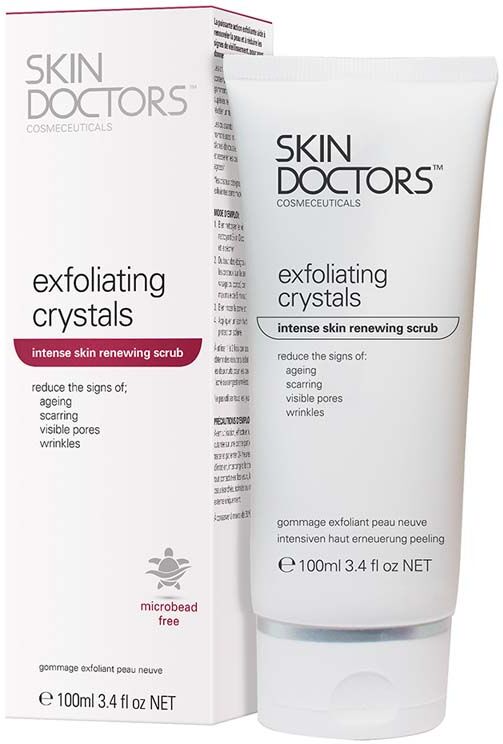
Skin Doctors Crystals 100mlSkin Doctors Exfoliating Crystals 100ml uses micro-dermabrasion and Hydroxy Acid exfoliation to boost skin's health and radiance. It works to boost dull and dreary looking skin effectively resurfacing the outer layer. The Intensive Mircro-Dermabraion Crystals work to break down the top layer of skin and gently exfoliate to smooth away any visible signs of ageing, pigmentation and scars. It promotes skin cell renewal and stimulates collagen to plump and refresh your complexion using Tea Tree Oil without scratching or damaging your skin. Microencapsulated beads – Rather than aluminum oxide (Corundum), these microencapsulated beads will give you all of the benefits of a powerful exfoliation, without harsh scratching or damage to your skin. Melaleuca alternifolia (Australian Tea Tree) Oil – Obtained from the leaves and branchlets of the Australian tree Melaleuca alternifolia, Tea Tree has antibacterial properties and has been shown to assist in the treatment of skin infections, including acne blemishes.15,97 £*Shipping: 2,95 £Secure redirect to the provider


-
How do I recognize a mono- or polyprotic acid?
A monoprotic acid is an acid that can donate only one proton (hydrogen ion) per molecule, such as hydrochloric acid (HCl) or acetic acid (CH3COOH). On the other hand, a polyprotic acid is an acid that can donate more than one proton per molecule, such as sulfuric acid (H2SO4) or phosphoric acid (H3PO4). One way to recognize a polyprotic acid is by looking at the chemical formula and identifying the presence of multiple hydrogen atoms that can potentially be donated as protons. Additionally, the acid's name may also provide a clue, as polyprotic acids often have prefixes such as di- or tri- to indicate the number of protons that can be donated. **
-
Why is the second dissociation stage weaker in polyprotic acids?
The second dissociation stage is weaker in polyprotic acids because after the first proton is removed, the remaining ion has a higher negative charge, making it more difficult to remove the second proton. This increased negative charge leads to stronger electrostatic attraction between the remaining ion and the proton, making it harder for the second proton to dissociate. Additionally, the second dissociation occurs at a lower pH, where the concentration of H+ ions is lower, further reducing the likelihood of the second dissociation. Overall, these factors contribute to the weaker second dissociation stage in polyprotic acids. **
-
How can I tell if an acid is monoprotic or polyprotic?
You can determine if an acid is monoprotic or polyprotic by looking at its chemical formula. If the formula contains only one hydrogen ion (H+), then the acid is monoprotic. However, if the formula contains more than one hydrogen ion, then the acid is polyprotic. Additionally, you can also look at the acid's chemical structure and its ability to donate multiple hydrogen ions to determine if it is polyprotic. **
-
Can someone explain the meaning of monoprotic and polyprotic to me?
Sure! Monoprotic and polyprotic refer to the number of protons that can be donated by an acid. Monoprotic acids can donate one proton, while polyprotic acids can donate more than one proton. For example, hydrochloric acid (HCl) is monoprotic because it can donate one proton, while sulfuric acid (H2SO4) is polyprotic because it can donate two protons. This distinction is important in understanding the behavior and properties of different acids in chemical reactions. **

How do you calculate the concentration of a polyprotic acid through titration?
To calculate the concentration of a polyprotic acid through titration, you would first need to determine the equivalence point of the titration by using an indicator or a pH meter. Then, you would use the volume of titrant (such as a strong base) needed to reach the equivalence point and the known molarity of the titrant to calculate the moles of acid present. Since polyprotic acids can donate multiple protons, you would need to consider the number of moles of protons donated by the acid and the stoichiometry of the acid-base reaction to calculate the concentration of the polyprotic acid. **
How can the concentration of a polyprotic acid be determined by titration?
The concentration of a polyprotic acid can be determined by titration using a strong base. Since polyprotic acids can donate multiple protons, the titration curve will have multiple equivalence points, corresponding to the different dissociation steps of the acid. By monitoring the pH during the titration, the inflection points on the curve can be used to calculate the concentration of the acid. The volume of the base required to reach each equivalence point can also be used to determine the molar concentration of the acid. **
Top-Angebote
Products related to Polyprotic:
-
Drop Dash Deals Premium Dental & Medical Dry Heat Sterilizer Adjustable Dental Sterilizer Autoclave For Clinic, Tattoo & Vet Instrumen Premium Dental & Medical Dry Heat Sterilizer Adjustable Dental Sterilizer Autoclave For Clinic, Tattoo & Vet InstrumenStep up your hygiene game with a professionalgrade sterilizer designed for those who demand reliable, consistent results every time. This 1 pc of compact dry heat sterilizer delivers powerful, hightemperature instrument sterilization ideal for...89,97 $*Shipping: 0,00 $Secure redirect to the provider
-
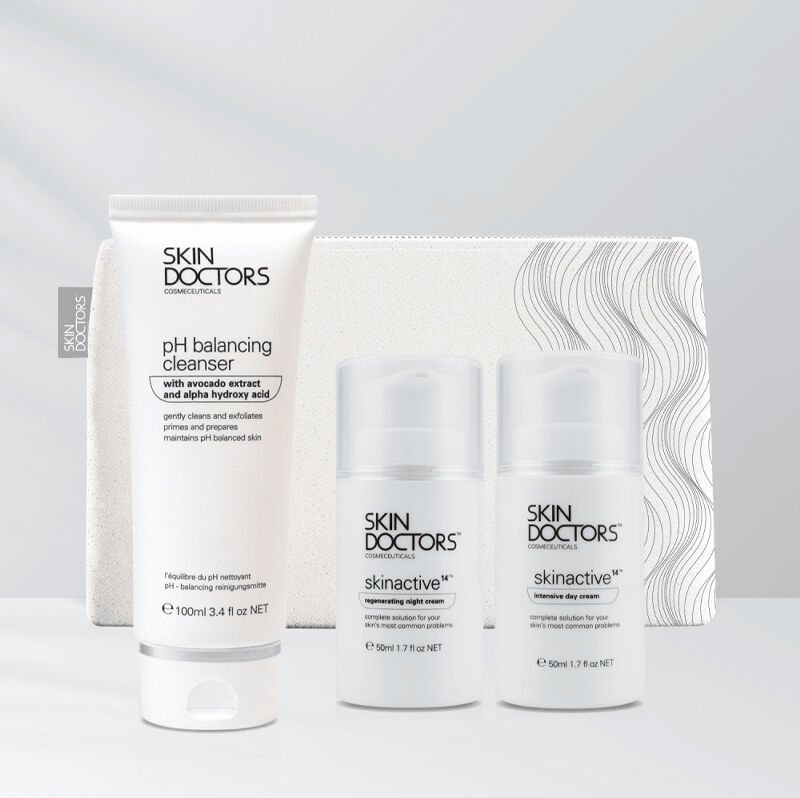
Skin Doctors EssentialsThe Skin Doctors Daily Essentials Gift Se offers a complete solution to the most common skincare problems. Discover skincare that gives you that all-time glow, day and night. Set Includes: 1 x Skin Doctors Skinactive14 Day Cream 1 x Skin Doctors Skinactive14 Night Cream 1 x Skin Doctors pH Balancing Cleanser 1 x Skin Doctors Toiletry Bag43,49 £*Shipping: 0,00 £Secure redirect to the provider
-
Skin Doctors Radiance SetPerfect as a gift this Mothers Day, The Youthful Radiance Set from Skin Doctors. The products included in this set work to re-awaken tired skin and achieve a more even and glowing complexion. Set Includes: 1 x Skin Doctors Radiance & Renew 1 x Skin Doctors pH Balancing Cleanser 1 x Skin Doctors Toiletry Bag28,76 £*Shipping: 0,00 £Secure redirect to the provider
-
Skin Doctors Plump 50mlSkin Doctors Antarctilyne Plump is a clinically proven face cream which works to increase your skin's condition within 7 days! It boost skin's collagen levels and protects it from decreasing, maintaining skin's firmness and elasticity for a healthier and youthful appearance!Formulated with triple action skin boosting ingredient Trylagen, the cream is a blend of peptides and proteins to enhance skin's appearance for a brighter fuller complexion.35,62 £*Shipping: 0,00 £Secure redirect to the provider
-
Is ammonia polyprotic or monoprotic?
Ammonia is a monoprotic base, meaning it can donate only one proton (H+) in a chemical reaction. This is because ammonia has only one nitrogen atom that can accept a proton to form the ammonium ion (NH4+). Therefore, ammonia is considered monoprotic. **
-
What are monoprotic and polyprotic acids?
Monoprotic acids are acids that can donate only one proton (hydrogen ion) per molecule when they dissociate in water. Examples include hydrochloric acid (HCl) and acetic acid (CH3COOH). Polyprotic acids, on the other hand, are acids that can donate more than one proton per molecule when they dissociate in water. Examples include sulfuric acid (H2SO4) and phosphoric acid (H3PO4). **
-
How do I recognize a mono- or polyprotic acid?
A monoprotic acid is an acid that can donate only one proton (hydrogen ion) per molecule, such as hydrochloric acid (HCl) or acetic acid (CH3COOH). On the other hand, a polyprotic acid is an acid that can donate more than one proton per molecule, such as sulfuric acid (H2SO4) or phosphoric acid (H3PO4). One way to recognize a polyprotic acid is by looking at the chemical formula and identifying the presence of multiple hydrogen atoms that can potentially be donated as protons. Additionally, the acid's name may also provide a clue, as polyprotic acids often have prefixes such as di- or tri- to indicate the number of protons that can be donated. **
-
Why is the second dissociation stage weaker in polyprotic acids?
The second dissociation stage is weaker in polyprotic acids because after the first proton is removed, the remaining ion has a higher negative charge, making it more difficult to remove the second proton. This increased negative charge leads to stronger electrostatic attraction between the remaining ion and the proton, making it harder for the second proton to dissociate. Additionally, the second dissociation occurs at a lower pH, where the concentration of H+ ions is lower, further reducing the likelihood of the second dissociation. Overall, these factors contribute to the weaker second dissociation stage in polyprotic acids. **
Similar search terms for Polyprotic
-
Skin Doctors Advance 30mlSkin Doctors Relaxaderm Advance is an innovative cream which plumps, boosts and firms your skin for a healthier younger appearance. Smoothing the skin and evening out fine lines and wrinkles by relaxing the facial muscles, this cream is a miracle worker! So, how does the only injection-free wrinkle relaxer do it? Formulated with the effective power of Dermatox-63 to enhance the skin with peptides and Hyaluronan, which is a non-sulfate ingredient that locks in essential moisture within the dermal tissue, thereby improving skin's elasticity and reducing the appearance of wrinkles. Key ingredients also includes: Hyaluronic Acid which holds 1000 times its molecular weight in water. Through these water retaining properties, it helps to rejuvenate the skin, plumping it from the inside out. Ingredients Aqua (Water), Ethylhexyl Methoxycinnamate, Caprylic/Capric Triglyceride, Glyceryl Stearate, Cetearyl Alcohol, Ethylhexyl Stearate, Dimethicone, Coco-Caprylate, Stearyl Alcohol, Phenoxyethanol, PEG-100 Stearate, Ceteareth-20, Caprylyl Glycol, PEG-20 Stearate, Triethanolamine, Parfum (Fragrance), Carbomer, Sodium Benzoate, Sodium Hyaluronate, Sodium Stearate, BHT, Acetyl Octapeptide-3, Pentapeptide-18, Limonene, Linalool, CI 77891 (Titanium Dioxide).23,99 £*Shipping: 0,00 £Secure redirect to the provider
-
Skin Doctors Crystals 100mlSkin Doctors Exfoliating Crystals 100ml uses micro-dermabrasion and Hydroxy Acid exfoliation to boost skin's health and radiance. It works to boost dull and dreary looking skin effectively resurfacing the outer layer. The Intensive Mircro-Dermabraion Crystals work to break down the top layer of skin and gently exfoliate to smooth away any visible signs of ageing, pigmentation and scars. It promotes skin cell renewal and stimulates collagen to plump and refresh your complexion using Tea Tree Oil without scratching or damaging your skin. Microencapsulated beads – Rather than aluminum oxide (Corundum), these microencapsulated beads will give you all of the benefits of a powerful exfoliation, without harsh scratching or damage to your skin. Melaleuca alternifolia (Australian Tea Tree) Oil – Obtained from the leaves and branchlets of the Australian tree Melaleuca alternifolia, Tea Tree has antibacterial properties and has been shown to assist in the treatment of skin infections, including acne blemishes.15,97 £*Shipping: 2,95 £Secure redirect to the provider
-
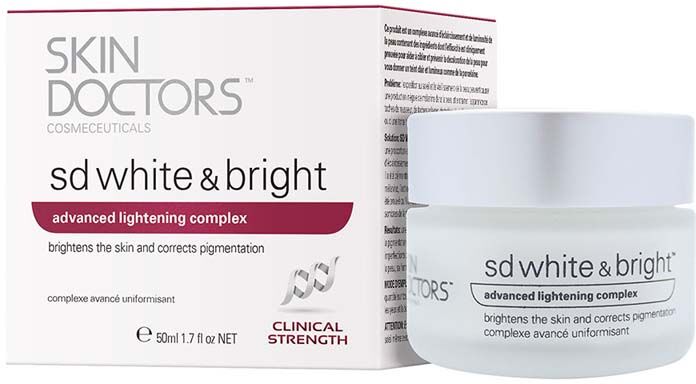
Skin Doctors White & Bright 50mlSkin Doctors SD White & Bright is a clinically proven face cream to naturally achieve a bright complexion! Minimising the imbalance and discolouration of skin for an even result whilst supporting skin's firmness and locking in moisture. Key Ingredients: ß-White™ - A dual-action active to decrease future skin discolouration by having a 79% decrease on Melanin Synthesis. UVA/UVB Filters - To help reduce pigmentation caused by UV exposure Vitamin E - To provide antioxidant protection against external aggressors The Results: Skin appears overall lighter Hyperpigmentation appears reduced Skin tone is more even Imperfections are reduced The cream reduces free radical damage, UV damage and pigmentation caused by freckles and age spots.19,12 £*Shipping: 0,00 £Secure redirect to the provider
-
Skin Doctors No More System PackSkin Doctors Hair No More System Pack is your answer to unwanted hair. Skin Doctors Hair No More System Pack includes: 2 x Hair Removal Cream 100ml Full-Size 1 x Hair No More Inhibitor Spray 150ml Full-Size The pack effectively removes hair and minimises it's regrowth for a longer lasting smooth result. Salicylic Acid- (from willow bark) - acts as an antiseptic agent Witch Hazel - helps in the healing of damaged skin. An excellent natural astringent giving skin a refreshed and smooth feeling. Hypericum - this herb is also known to soothe the skin when used in a topical form, and when used with Witch Hazel they create a powerful but natural analgesic16,00 £*Shipping: 2,95 £Secure redirect to the provider
-
How can I tell if an acid is monoprotic or polyprotic?
You can determine if an acid is monoprotic or polyprotic by looking at its chemical formula. If the formula contains only one hydrogen ion (H+), then the acid is monoprotic. However, if the formula contains more than one hydrogen ion, then the acid is polyprotic. Additionally, you can also look at the acid's chemical structure and its ability to donate multiple hydrogen ions to determine if it is polyprotic. **
-
Can someone explain the meaning of monoprotic and polyprotic to me?
Sure! Monoprotic and polyprotic refer to the number of protons that can be donated by an acid. Monoprotic acids can donate one proton, while polyprotic acids can donate more than one proton. For example, hydrochloric acid (HCl) is monoprotic because it can donate one proton, while sulfuric acid (H2SO4) is polyprotic because it can donate two protons. This distinction is important in understanding the behavior and properties of different acids in chemical reactions. **
-
How do you calculate the concentration of a polyprotic acid through titration?
To calculate the concentration of a polyprotic acid through titration, you would first need to determine the equivalence point of the titration by using an indicator or a pH meter. Then, you would use the volume of titrant (such as a strong base) needed to reach the equivalence point and the known molarity of the titrant to calculate the moles of acid present. Since polyprotic acids can donate multiple protons, you would need to consider the number of moles of protons donated by the acid and the stoichiometry of the acid-base reaction to calculate the concentration of the polyprotic acid. **
-
How can the concentration of a polyprotic acid be determined by titration?
The concentration of a polyprotic acid can be determined by titration using a strong base. Since polyprotic acids can donate multiple protons, the titration curve will have multiple equivalence points, corresponding to the different dissociation steps of the acid. By monitoring the pH during the titration, the inflection points on the curve can be used to calculate the concentration of the acid. The volume of the base required to reach each equivalence point can also be used to determine the molar concentration of the acid. **
* All prices are inclusive of VAT and, if applicable, plus shipping costs. The offer information is based on the details provided by the respective shop and is updated through automated processes. Real-time updates do not occur, so deviations can occur in individual cases. ** Note: Parts of this content were created by AI.