Buy aerztehaus.eu ?
We are moving the project
aerztehaus.eu .
Are you interested in purchasing the domain
aerztehaus.eu ?
domain@kv-gmbh.de · 0541-91531010
Buy aerztehaus.eu ?
What is the deontological perspective?
The deontological perspective is an ethical theory that focuses on the inherent rightness or wrongness of actions themselves, rather than the consequences of those actions. It is based on the idea that certain actions are morally obligatory regardless of their outcomes. Deontologists believe that individuals have a duty to follow certain moral rules or principles, such as honesty or respecting others' autonomy, regardless of the potential benefits or harms that may result. This perspective is often associated with philosophers like Immanuel Kant, who argued that moral principles are universal and apply to all rational beings. **
What is meant by deontological and teleological?
Deontological ethics is an ethical theory that focuses on the inherent rightness or wrongness of actions themselves, rather than the consequences of those actions. It emphasizes the importance of following moral rules and duties, regardless of the outcomes. On the other hand, teleological ethics, also known as consequentialism, is an ethical theory that evaluates the morality of actions based on their outcomes or consequences. It emphasizes the idea that the rightness or wrongness of an action is determined by the overall good or bad results it produces. In summary, deontological ethics focuses on the inherent nature of actions, while teleological ethics focuses on the outcomes of actions. **


Similar search terms for Deontological
Top-Angebote
Products related to Deontological:
-
Skin Doctors Radiance SetPerfect as a gift this Mothers Day, The Youthful Radiance Set from Skin Doctors. The products included in this set work to re-awaken tired skin and achieve a more even and glowing complexion. Set Includes: 1 x Skin Doctors Radiance & Renew 1 x Skin Doctors pH Balancing Cleanser 1 x Skin Doctors Toiletry Bag28,76 £*Shipping: 0,00 £Secure redirect to the provider
-
Skin Doctors Plump 50mlSkin Doctors Antarctilyne Plump is a clinically proven face cream which works to increase your skin's condition within 7 days! It boost skin's collagen levels and protects it from decreasing, maintaining skin's firmness and elasticity for a healthier and youthful appearance!Formulated with triple action skin boosting ingredient Trylagen, the cream is a blend of peptides and proteins to enhance skin's appearance for a brighter fuller complexion.35,62 £*Shipping: 0,00 £Secure redirect to the provider
-
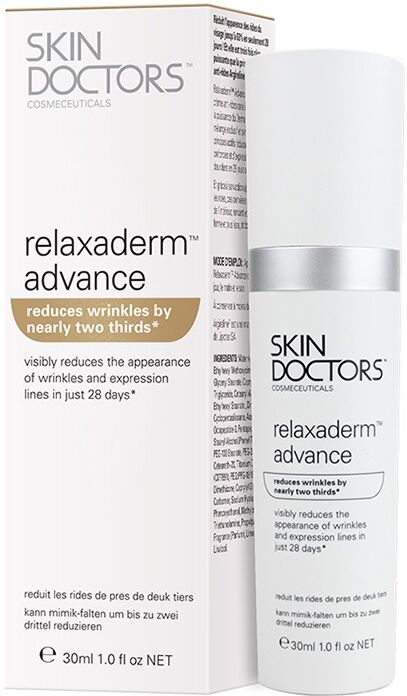
Skin Doctors Advance 30mlSkin Doctors Relaxaderm Advance is an innovative cream which plumps, boosts and firms your skin for a healthier younger appearance. Smoothing the skin and evening out fine lines and wrinkles by relaxing the facial muscles, this cream is a miracle worker! So, how does the only injection-free wrinkle relaxer do it? Formulated with the effective power of Dermatox-63 to enhance the skin with peptides and Hyaluronan, which is a non-sulfate ingredient that locks in essential moisture within the dermal tissue, thereby improving skin's elasticity and reducing the appearance of wrinkles. Key ingredients also includes: Hyaluronic Acid which holds 1000 times its molecular weight in water. Through these water retaining properties, it helps to rejuvenate the skin, plumping it from the inside out. Ingredients Aqua (Water), Ethylhexyl Methoxycinnamate, Caprylic/Capric Triglyceride, Glyceryl Stearate, Cetearyl Alcohol, Ethylhexyl Stearate, Dimethicone, Coco-Caprylate, Stearyl Alcohol, Phenoxyethanol, PEG-100 Stearate, Ceteareth-20, Caprylyl Glycol, PEG-20 Stearate, Triethanolamine, Parfum (Fragrance), Carbomer, Sodium Benzoate, Sodium Hyaluronate, Sodium Stearate, BHT, Acetyl Octapeptide-3, Pentapeptide-18, Limonene, Linalool, CI 77891 (Titanium Dioxide).23,99 £*Shipping: 0,00 £Secure redirect to the provider
-
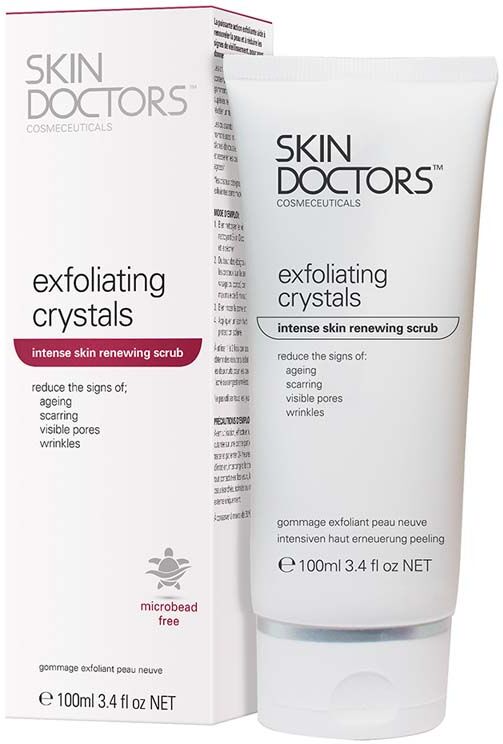
Skin Doctors Crystals 100mlSkin Doctors Exfoliating Crystals 100ml uses micro-dermabrasion and Hydroxy Acid exfoliation to boost skin's health and radiance. It works to boost dull and dreary looking skin effectively resurfacing the outer layer. The Intensive Mircro-Dermabraion Crystals work to break down the top layer of skin and gently exfoliate to smooth away any visible signs of ageing, pigmentation and scars. It promotes skin cell renewal and stimulates collagen to plump and refresh your complexion using Tea Tree Oil without scratching or damaging your skin. Microencapsulated beads – Rather than aluminum oxide (Corundum), these microencapsulated beads will give you all of the benefits of a powerful exfoliation, without harsh scratching or damage to your skin. Melaleuca alternifolia (Australian Tea Tree) Oil – Obtained from the leaves and branchlets of the Australian tree Melaleuca alternifolia, Tea Tree has antibacterial properties and has been shown to assist in the treatment of skin infections, including acne blemishes.15,97 £*Shipping: 2,95 £Secure redirect to the provider


-
Does Kant's deontological ethics contradict Aristotle's eudaemonistic ethics?
Kant's deontological ethics and Aristotle's eudaemonistic ethics have some fundamental differences, but they do not necessarily contradict each other. Kant's ethics focus on duty and the intention behind actions, while Aristotle's ethics emphasize achieving eudaimonia, or human flourishing, through virtuous actions. While Kant's emphasis on duty can sometimes conflict with Aristotle's emphasis on virtue, both ethical theories ultimately aim to guide individuals towards leading a good and moral life. Therefore, while they may approach ethics from different perspectives, they can be seen as complementary rather than contradictory. **
-
What is the difference between deontological ethics and utilitarianism?
Deontological ethics is an ethical theory that focuses on the inherent rightness or wrongness of actions themselves, regardless of their consequences. It emphasizes the importance of following moral rules and duties, such as telling the truth or keeping promises, regardless of the outcomes. On the other hand, utilitarianism is a consequentialist ethical theory that evaluates the morality of actions based on their outcomes. It prioritizes maximizing overall happiness or well-being for the greatest number of people, often through the calculation of benefits and harms. In summary, deontological ethics emphasizes the inherent morality of actions, while utilitarianism focuses on the consequences of actions. **
-
Does discourse ethics have a teleological or deontological approach?
Discourse ethics is primarily associated with a deontological approach. It focuses on the principles of communication and interaction between individuals, emphasizing the importance of ethical norms and rules in guiding discourse. The goal is to ensure that communication is based on mutual respect, equality, and rationality, rather than aiming towards a specific outcome or goal. By prioritizing the ethical principles of communication, discourse ethics aims to create a fair and just dialogue among participants. **
-
Is deontological ethics exactly the same as the categorical imperative?
Deontological ethics is a broader ethical theory that states that actions are inherently right or wrong, regardless of their consequences. The categorical imperative, on the other hand, is a specific formulation within deontological ethics proposed by Immanuel Kant. While the categorical imperative is a key component of deontological ethics, deontological ethics encompasses a wider range of principles and theories beyond just the categorical imperative. **

What are the differences between deontological ethics and utilitarian ethics?
Deontological ethics, also known as duty-based ethics, focuses on the inherent rightness or wrongness of actions themselves, regardless of their consequences. It emphasizes following moral rules and duties, such as telling the truth or keeping promises, based on principles like the categorical imperative. On the other hand, utilitarian ethics, also known as consequentialist ethics, prioritizes the outcomes or consequences of actions. It aims to maximize overall happiness or well-being for the greatest number of people, often through the calculation of benefits and harms. While deontological ethics emphasizes duty and rules, utilitarian ethics prioritizes the greatest good for the greatest number. **
What is the difference between deontological ethics and utilitarian ethics?
Deontological ethics, also known as duty-based ethics, focuses on the inherent rightness or wrongness of actions themselves, regardless of their consequences. This means that certain actions are considered morally right or wrong based on whether they adhere to a set of rules or principles. On the other hand, utilitarian ethics, also known as consequentialist ethics, evaluates the morality of actions based on their outcomes or consequences. In utilitarianism, the rightness or wrongness of an action is determined by its ability to produce the greatest overall happiness or pleasure for the greatest number of people. **
Top-Angebote
Products related to Deontological:
-
Drop Dash Deals Premium Dental & Medical Dry Heat Sterilizer Adjustable Dental Sterilizer Autoclave For Clinic, Tattoo & Vet Instrumen Premium Dental & Medical Dry Heat Sterilizer Adjustable Dental Sterilizer Autoclave For Clinic, Tattoo & Vet InstrumenStep up your hygiene game with a professionalgrade sterilizer designed for those who demand reliable, consistent results every time. This 1 pc of compact dry heat sterilizer delivers powerful, hightemperature instrument sterilization ideal for...89,97 $*Shipping: 0,00 $Secure redirect to the provider
-
Skin Doctors EssentialsThe Skin Doctors Daily Essentials Gift Se offers a complete solution to the most common skincare problems. Discover skincare that gives you that all-time glow, day and night. Set Includes: 1 x Skin Doctors Skinactive14 Day Cream 1 x Skin Doctors Skinactive14 Night Cream 1 x Skin Doctors pH Balancing Cleanser 1 x Skin Doctors Toiletry Bag43,49 £*Shipping: 0,00 £Secure redirect to the provider
-
Skin Doctors Radiance SetPerfect as a gift this Mothers Day, The Youthful Radiance Set from Skin Doctors. The products included in this set work to re-awaken tired skin and achieve a more even and glowing complexion. Set Includes: 1 x Skin Doctors Radiance & Renew 1 x Skin Doctors pH Balancing Cleanser 1 x Skin Doctors Toiletry Bag28,76 £*Shipping: 0,00 £Secure redirect to the provider
-
Skin Doctors Plump 50mlSkin Doctors Antarctilyne Plump is a clinically proven face cream which works to increase your skin's condition within 7 days! It boost skin's collagen levels and protects it from decreasing, maintaining skin's firmness and elasticity for a healthier and youthful appearance!Formulated with triple action skin boosting ingredient Trylagen, the cream is a blend of peptides and proteins to enhance skin's appearance for a brighter fuller complexion.35,62 £*Shipping: 0,00 £Secure redirect to the provider
-
What is the deontological perspective?
The deontological perspective is an ethical theory that focuses on the inherent rightness or wrongness of actions themselves, rather than the consequences of those actions. It is based on the idea that certain actions are morally obligatory regardless of their outcomes. Deontologists believe that individuals have a duty to follow certain moral rules or principles, such as honesty or respecting others' autonomy, regardless of the potential benefits or harms that may result. This perspective is often associated with philosophers like Immanuel Kant, who argued that moral principles are universal and apply to all rational beings. **
-
What is meant by deontological and teleological?
Deontological ethics is an ethical theory that focuses on the inherent rightness or wrongness of actions themselves, rather than the consequences of those actions. It emphasizes the importance of following moral rules and duties, regardless of the outcomes. On the other hand, teleological ethics, also known as consequentialism, is an ethical theory that evaluates the morality of actions based on their outcomes or consequences. It emphasizes the idea that the rightness or wrongness of an action is determined by the overall good or bad results it produces. In summary, deontological ethics focuses on the inherent nature of actions, while teleological ethics focuses on the outcomes of actions. **
-
Does Kant's deontological ethics contradict Aristotle's eudaemonistic ethics?
Kant's deontological ethics and Aristotle's eudaemonistic ethics have some fundamental differences, but they do not necessarily contradict each other. Kant's ethics focus on duty and the intention behind actions, while Aristotle's ethics emphasize achieving eudaimonia, or human flourishing, through virtuous actions. While Kant's emphasis on duty can sometimes conflict with Aristotle's emphasis on virtue, both ethical theories ultimately aim to guide individuals towards leading a good and moral life. Therefore, while they may approach ethics from different perspectives, they can be seen as complementary rather than contradictory. **
-
What is the difference between deontological ethics and utilitarianism?
Deontological ethics is an ethical theory that focuses on the inherent rightness or wrongness of actions themselves, regardless of their consequences. It emphasizes the importance of following moral rules and duties, such as telling the truth or keeping promises, regardless of the outcomes. On the other hand, utilitarianism is a consequentialist ethical theory that evaluates the morality of actions based on their outcomes. It prioritizes maximizing overall happiness or well-being for the greatest number of people, often through the calculation of benefits and harms. In summary, deontological ethics emphasizes the inherent morality of actions, while utilitarianism focuses on the consequences of actions. **
Similar search terms for Deontological
-
Skin Doctors Advance 30mlSkin Doctors Relaxaderm Advance is an innovative cream which plumps, boosts and firms your skin for a healthier younger appearance. Smoothing the skin and evening out fine lines and wrinkles by relaxing the facial muscles, this cream is a miracle worker! So, how does the only injection-free wrinkle relaxer do it? Formulated with the effective power of Dermatox-63 to enhance the skin with peptides and Hyaluronan, which is a non-sulfate ingredient that locks in essential moisture within the dermal tissue, thereby improving skin's elasticity and reducing the appearance of wrinkles. Key ingredients also includes: Hyaluronic Acid which holds 1000 times its molecular weight in water. Through these water retaining properties, it helps to rejuvenate the skin, plumping it from the inside out. Ingredients Aqua (Water), Ethylhexyl Methoxycinnamate, Caprylic/Capric Triglyceride, Glyceryl Stearate, Cetearyl Alcohol, Ethylhexyl Stearate, Dimethicone, Coco-Caprylate, Stearyl Alcohol, Phenoxyethanol, PEG-100 Stearate, Ceteareth-20, Caprylyl Glycol, PEG-20 Stearate, Triethanolamine, Parfum (Fragrance), Carbomer, Sodium Benzoate, Sodium Hyaluronate, Sodium Stearate, BHT, Acetyl Octapeptide-3, Pentapeptide-18, Limonene, Linalool, CI 77891 (Titanium Dioxide).23,99 £*Shipping: 0,00 £Secure redirect to the provider
-
Skin Doctors Crystals 100mlSkin Doctors Exfoliating Crystals 100ml uses micro-dermabrasion and Hydroxy Acid exfoliation to boost skin's health and radiance. It works to boost dull and dreary looking skin effectively resurfacing the outer layer. The Intensive Mircro-Dermabraion Crystals work to break down the top layer of skin and gently exfoliate to smooth away any visible signs of ageing, pigmentation and scars. It promotes skin cell renewal and stimulates collagen to plump and refresh your complexion using Tea Tree Oil without scratching or damaging your skin. Microencapsulated beads – Rather than aluminum oxide (Corundum), these microencapsulated beads will give you all of the benefits of a powerful exfoliation, without harsh scratching or damage to your skin. Melaleuca alternifolia (Australian Tea Tree) Oil – Obtained from the leaves and branchlets of the Australian tree Melaleuca alternifolia, Tea Tree has antibacterial properties and has been shown to assist in the treatment of skin infections, including acne blemishes.15,97 £*Shipping: 2,95 £Secure redirect to the provider
-
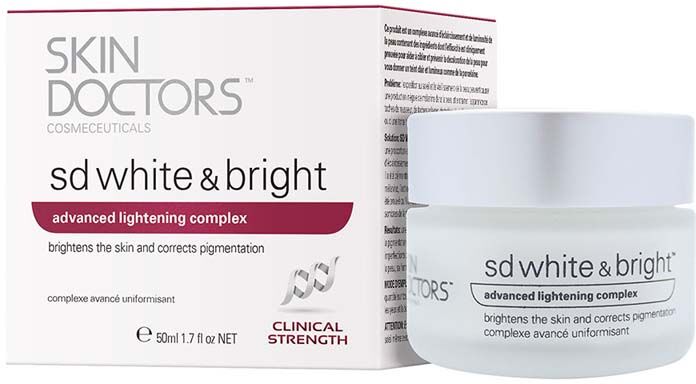
Skin Doctors White & Bright 50mlSkin Doctors SD White & Bright is a clinically proven face cream to naturally achieve a bright complexion! Minimising the imbalance and discolouration of skin for an even result whilst supporting skin's firmness and locking in moisture. Key Ingredients: ß-White™ - A dual-action active to decrease future skin discolouration by having a 79% decrease on Melanin Synthesis. UVA/UVB Filters - To help reduce pigmentation caused by UV exposure Vitamin E - To provide antioxidant protection against external aggressors The Results: Skin appears overall lighter Hyperpigmentation appears reduced Skin tone is more even Imperfections are reduced The cream reduces free radical damage, UV damage and pigmentation caused by freckles and age spots.19,12 £*Shipping: 0,00 £Secure redirect to the provider
-
Skin Doctors No More System PackSkin Doctors Hair No More System Pack is your answer to unwanted hair. Skin Doctors Hair No More System Pack includes: 2 x Hair Removal Cream 100ml Full-Size 1 x Hair No More Inhibitor Spray 150ml Full-Size The pack effectively removes hair and minimises it's regrowth for a longer lasting smooth result. Salicylic Acid- (from willow bark) - acts as an antiseptic agent Witch Hazel - helps in the healing of damaged skin. An excellent natural astringent giving skin a refreshed and smooth feeling. Hypericum - this herb is also known to soothe the skin when used in a topical form, and when used with Witch Hazel they create a powerful but natural analgesic16,00 £*Shipping: 2,95 £Secure redirect to the provider
-
Does discourse ethics have a teleological or deontological approach?
Discourse ethics is primarily associated with a deontological approach. It focuses on the principles of communication and interaction between individuals, emphasizing the importance of ethical norms and rules in guiding discourse. The goal is to ensure that communication is based on mutual respect, equality, and rationality, rather than aiming towards a specific outcome or goal. By prioritizing the ethical principles of communication, discourse ethics aims to create a fair and just dialogue among participants. **
-
Is deontological ethics exactly the same as the categorical imperative?
Deontological ethics is a broader ethical theory that states that actions are inherently right or wrong, regardless of their consequences. The categorical imperative, on the other hand, is a specific formulation within deontological ethics proposed by Immanuel Kant. While the categorical imperative is a key component of deontological ethics, deontological ethics encompasses a wider range of principles and theories beyond just the categorical imperative. **
-
What are the differences between deontological ethics and utilitarian ethics?
Deontological ethics, also known as duty-based ethics, focuses on the inherent rightness or wrongness of actions themselves, regardless of their consequences. It emphasizes following moral rules and duties, such as telling the truth or keeping promises, based on principles like the categorical imperative. On the other hand, utilitarian ethics, also known as consequentialist ethics, prioritizes the outcomes or consequences of actions. It aims to maximize overall happiness or well-being for the greatest number of people, often through the calculation of benefits and harms. While deontological ethics emphasizes duty and rules, utilitarian ethics prioritizes the greatest good for the greatest number. **
-
What is the difference between deontological ethics and utilitarian ethics?
Deontological ethics, also known as duty-based ethics, focuses on the inherent rightness or wrongness of actions themselves, regardless of their consequences. This means that certain actions are considered morally right or wrong based on whether they adhere to a set of rules or principles. On the other hand, utilitarian ethics, also known as consequentialist ethics, evaluates the morality of actions based on their outcomes or consequences. In utilitarianism, the rightness or wrongness of an action is determined by its ability to produce the greatest overall happiness or pleasure for the greatest number of people. **
* All prices are inclusive of VAT and, if applicable, plus shipping costs. The offer information is based on the details provided by the respective shop and is updated through automated processes. Real-time updates do not occur, so deviations can occur in individual cases. ** Note: Parts of this content were created by AI.