Buy aerztehaus.eu ?
We are moving the project
aerztehaus.eu .
Are you interested in purchasing the domain
aerztehaus.eu ?
domain@kv-gmbh.de · 0541-91531010
Buy aerztehaus.eu ?
What is a glycosidic bond?
A glycosidic bond is a type of covalent bond that joins a carbohydrate molecule to another group, which can be another carbohydrate or a non-carbohydrate molecule. It is formed through a condensation reaction between the hydroxyl group of one molecule and the anomeric carbon of another molecule, resulting in the loss of a water molecule. Glycosidic bonds are important in the structure of carbohydrates, such as in forming disaccharides like sucrose or polysaccharides like starch. **
What is the glycosidic bond in sucrose?
The glycosidic bond in sucrose is a type of covalent bond that links the glucose and fructose molecules together. It is a specific type of linkage known as an alpha-1,2-glycosidic bond, which forms between the carbon-1 atom of glucose and the carbon-2 atom of fructose. This bond is responsible for the formation of the disaccharide sucrose, which is commonly known as table sugar. **

Similar search terms for Glycosidic
Top-Angebote
Products related to Glycosidic:
-
Skin Doctors Radiance SetPerfect as a gift this Mothers Day, The Youthful Radiance Set from Skin Doctors. The products included in this set work to re-awaken tired skin and achieve a more even and glowing complexion. Set Includes: 1 x Skin Doctors Radiance & Renew 1 x Skin Doctors pH Balancing Cleanser 1 x Skin Doctors Toiletry Bag28,76 £*Shipping: 0,00 £Secure redirect to the provider
-
Skin Doctors Plump 50mlSkin Doctors Antarctilyne Plump is a clinically proven face cream which works to increase your skin's condition within 7 days! It boost skin's collagen levels and protects it from decreasing, maintaining skin's firmness and elasticity for a healthier and youthful appearance!Formulated with triple action skin boosting ingredient Trylagen, the cream is a blend of peptides and proteins to enhance skin's appearance for a brighter fuller complexion.35,62 £*Shipping: 0,00 £Secure redirect to the provider
-
Skin Doctors Clear 50mlSkin Doctors Capillary Clear is an effective treatment that works to dramatically minimise the appearance of broken capillaries and blood vessels. By reducing the extravascular blood flow diminishes the chance of broken capillaries forming. Phytotonine - composed of concentrated extracts of Arnica, Cypress and Solomon’s Seal. It is rich in flavonoids, saponosides and procyanidols which are responsible for its favourable action on microcirculation and the strengthening of capillary walls. A scientific investigation showed that the application of Phytotonine for 3 weeks showed a 24% decrease in the redness of the affected area and a 25% reduction of extravascular blood flow, helping to improve the appearance of redness and broken capillaries.19,12 £*Shipping: 0,00 £Secure redirect to the provider
-
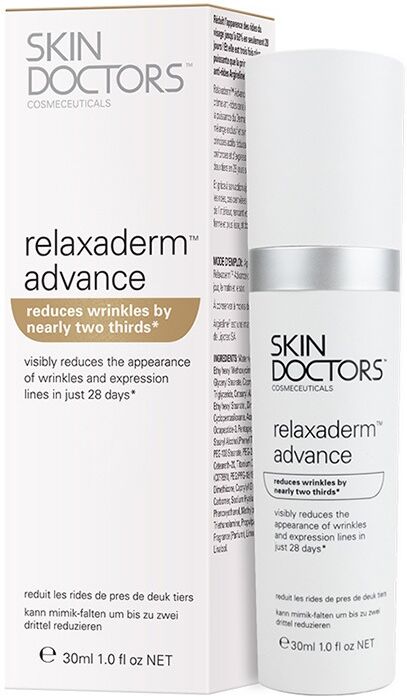
Skin Doctors Advance 30mlSkin Doctors Relaxaderm Advance is an innovative cream which plumps, boosts and firms your skin for a healthier younger appearance. Smoothing the skin and evening out fine lines and wrinkles by relaxing the facial muscles, this cream is a miracle worker! So, how does the only injection-free wrinkle relaxer do it? Formulated with the effective power of Dermatox-63 to enhance the skin with peptides and Hyaluronan, which is a non-sulfate ingredient that locks in essential moisture within the dermal tissue, thereby improving skin's elasticity and reducing the appearance of wrinkles. Key ingredients also includes: Hyaluronic Acid which holds 1000 times its molecular weight in water. Through these water retaining properties, it helps to rejuvenate the skin, plumping it from the inside out. Ingredients Aqua (Water), Ethylhexyl Methoxycinnamate, Caprylic/Capric Triglyceride, Glyceryl Stearate, Cetearyl Alcohol, Ethylhexyl Stearate, Dimethicone, Coco-Caprylate, Stearyl Alcohol, Phenoxyethanol, PEG-100 Stearate, Ceteareth-20, Caprylyl Glycol, PEG-20 Stearate, Triethanolamine, Parfum (Fragrance), Carbomer, Sodium Benzoate, Sodium Hyaluronate, Sodium Stearate, BHT, Acetyl Octapeptide-3, Pentapeptide-18, Limonene, Linalool, CI 77891 (Titanium Dioxide).23,99 £*Shipping: 0,00 £Secure redirect to the provider


-
What is a glycosidic bond in sucrose?
A glycosidic bond in sucrose is a type of covalent bond that links the glucose and fructose molecules together. It is formed through a condensation reaction, where a molecule of water is removed to join the two sugar molecules. This bond is important for the structure and function of sucrose, as it holds the two sugar molecules together and allows for the storage and transport of energy in plants. **
-
How to draw trehalose in a 2-11 glycosidic linkage?
To draw trehalose in a 2-11 glycosidic linkage, start by drawing two glucose molecules. Connect the first glucose molecule's carbon 2 to the second glucose molecule's carbon 1 with a glycosidic bond. This linkage represents the 2-1 glycosidic bond. Next, add another glucose molecule and connect its carbon 1 to the second glucose molecule's carbon 1 with a glycosidic bond. This linkage represents the 1-1 glycosidic bond. This structure represents trehalose in a 2-1,1 glycosidic linkage. **
-
Why is there a beta-1,4-glycosidic bond in lactose?
The beta-1,4-glycosidic bond in lactose is formed between the glucose and galactose molecules. This bond is important because it determines the structure and properties of lactose. The beta configuration of the glycosidic bond in lactose allows for the formation of a specific three-dimensional structure that is essential for its function as a disaccharide sugar found in milk. This bond also influences the way lactose is digested by the enzyme lactase in the human body. **
-
How do you draw trehalose in a 2-11 glycosidic bond?
To draw trehalose in a 2-11 glycosidic bond, you would first draw two glucose molecules connected by an alpha-1,1 glycosidic bond. Then, you would add another glucose molecule to the first glucose molecule in the 2 position, forming a 1,2 glycosidic bond. Finally, you would add the last glucose molecule to the second glucose molecule in the 1 position, forming a 2,1 glycosidic bond. This structure represents trehalose in a 2-11 glycosidic bond. **
How do you draw trehalose in a 2-11 glycosidic linkage?
To draw trehalose in a 2-11 glycosidic linkage, start by drawing two glucose molecules connected by an alpha-1,1 glycosidic bond. Then, draw another glucose molecule connected to the first glucose molecule in the pair by an alpha-1,2 glycosidic bond. This creates the 2-11 glycosidic linkage in trehalose. The resulting structure should show three glucose molecules connected in a linear fashion with the 2-11 glycosidic linkage between the first and third glucose molecules. **
What are the differences between an ester bond and glycosidic formation?
An ester bond is formed when a carboxyl group of one molecule reacts with a hydroxyl group of another molecule, resulting in the formation of an ester and the release of water. This type of bond is commonly found in lipids and is important for energy storage. On the other hand, glycosidic formation involves the bonding of a sugar molecule to another molecule, typically another sugar or an alcohol, through the reaction between the anomeric carbon of the sugar and a hydroxyl group of the other molecule. This type of bond is important for the formation of carbohydrates and is commonly found in polysaccharides such as starch and cellulose. **
Top-Angebote
Products related to Glycosidic:
-
Drop Dash Deals Premium Dental & Medical Dry Heat Sterilizer Adjustable Dental Sterilizer Autoclave For Clinic, Tattoo & Vet Instrumen Premium Dental & Medical Dry Heat Sterilizer Adjustable Dental Sterilizer Autoclave For Clinic, Tattoo & Vet InstrumenStep up your hygiene game with a professionalgrade sterilizer designed for those who demand reliable, consistent results every time. This 1 pc of compact dry heat sterilizer delivers powerful, hightemperature instrument sterilization ideal for...89,97 $*Shipping: 0,00 $Secure redirect to the provider
-
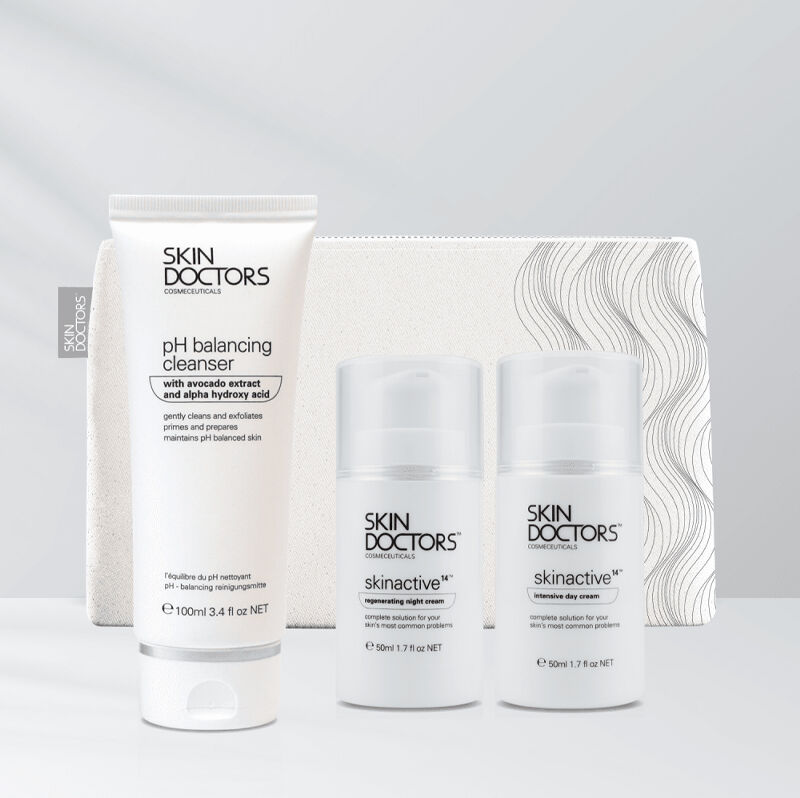
Skin Doctors EssentialsThe Skin Doctors Daily Essentials Gift Se offers a complete solution to the most common skincare problems. Discover skincare that gives you that all-time glow, day and night. Set Includes: 1 x Skin Doctors Skinactive14 Day Cream 1 x Skin Doctors Skinactive14 Night Cream 1 x Skin Doctors pH Balancing Cleanser 1 x Skin Doctors Toiletry Bag43,49 £*Shipping: 0,00 £Secure redirect to the provider
-
Skin Doctors Radiance SetPerfect as a gift this Mothers Day, The Youthful Radiance Set from Skin Doctors. The products included in this set work to re-awaken tired skin and achieve a more even and glowing complexion. Set Includes: 1 x Skin Doctors Radiance & Renew 1 x Skin Doctors pH Balancing Cleanser 1 x Skin Doctors Toiletry Bag28,76 £*Shipping: 0,00 £Secure redirect to the provider
-
Skin Doctors Plump 50mlSkin Doctors Antarctilyne Plump is a clinically proven face cream which works to increase your skin's condition within 7 days! It boost skin's collagen levels and protects it from decreasing, maintaining skin's firmness and elasticity for a healthier and youthful appearance!Formulated with triple action skin boosting ingredient Trylagen, the cream is a blend of peptides and proteins to enhance skin's appearance for a brighter fuller complexion.35,62 £*Shipping: 0,00 £Secure redirect to the provider
-
What is a glycosidic bond?
A glycosidic bond is a type of covalent bond that joins a carbohydrate molecule to another group, which can be another carbohydrate or a non-carbohydrate molecule. It is formed through a condensation reaction between the hydroxyl group of one molecule and the anomeric carbon of another molecule, resulting in the loss of a water molecule. Glycosidic bonds are important in the structure of carbohydrates, such as in forming disaccharides like sucrose or polysaccharides like starch. **
-
What is the glycosidic bond in sucrose?
The glycosidic bond in sucrose is a type of covalent bond that links the glucose and fructose molecules together. It is a specific type of linkage known as an alpha-1,2-glycosidic bond, which forms between the carbon-1 atom of glucose and the carbon-2 atom of fructose. This bond is responsible for the formation of the disaccharide sucrose, which is commonly known as table sugar. **
-
What is a glycosidic bond in sucrose?
A glycosidic bond in sucrose is a type of covalent bond that links the glucose and fructose molecules together. It is formed through a condensation reaction, where a molecule of water is removed to join the two sugar molecules. This bond is important for the structure and function of sucrose, as it holds the two sugar molecules together and allows for the storage and transport of energy in plants. **
-
How to draw trehalose in a 2-11 glycosidic linkage?
To draw trehalose in a 2-11 glycosidic linkage, start by drawing two glucose molecules. Connect the first glucose molecule's carbon 2 to the second glucose molecule's carbon 1 with a glycosidic bond. This linkage represents the 2-1 glycosidic bond. Next, add another glucose molecule and connect its carbon 1 to the second glucose molecule's carbon 1 with a glycosidic bond. This linkage represents the 1-1 glycosidic bond. This structure represents trehalose in a 2-1,1 glycosidic linkage. **
Similar search terms for Glycosidic
-
Skin Doctors Clear 50mlSkin Doctors Capillary Clear is an effective treatment that works to dramatically minimise the appearance of broken capillaries and blood vessels. By reducing the extravascular blood flow diminishes the chance of broken capillaries forming. Phytotonine - composed of concentrated extracts of Arnica, Cypress and Solomon’s Seal. It is rich in flavonoids, saponosides and procyanidols which are responsible for its favourable action on microcirculation and the strengthening of capillary walls. A scientific investigation showed that the application of Phytotonine for 3 weeks showed a 24% decrease in the redness of the affected area and a 25% reduction of extravascular blood flow, helping to improve the appearance of redness and broken capillaries.19,12 £*Shipping: 0,00 £Secure redirect to the provider
-
Skin Doctors Advance 30mlSkin Doctors Relaxaderm Advance is an innovative cream which plumps, boosts and firms your skin for a healthier younger appearance. Smoothing the skin and evening out fine lines and wrinkles by relaxing the facial muscles, this cream is a miracle worker! So, how does the only injection-free wrinkle relaxer do it? Formulated with the effective power of Dermatox-63 to enhance the skin with peptides and Hyaluronan, which is a non-sulfate ingredient that locks in essential moisture within the dermal tissue, thereby improving skin's elasticity and reducing the appearance of wrinkles. Key ingredients also includes: Hyaluronic Acid which holds 1000 times its molecular weight in water. Through these water retaining properties, it helps to rejuvenate the skin, plumping it from the inside out. Ingredients Aqua (Water), Ethylhexyl Methoxycinnamate, Caprylic/Capric Triglyceride, Glyceryl Stearate, Cetearyl Alcohol, Ethylhexyl Stearate, Dimethicone, Coco-Caprylate, Stearyl Alcohol, Phenoxyethanol, PEG-100 Stearate, Ceteareth-20, Caprylyl Glycol, PEG-20 Stearate, Triethanolamine, Parfum (Fragrance), Carbomer, Sodium Benzoate, Sodium Hyaluronate, Sodium Stearate, BHT, Acetyl Octapeptide-3, Pentapeptide-18, Limonene, Linalool, CI 77891 (Titanium Dioxide).23,99 £*Shipping: 0,00 £Secure redirect to the provider
-
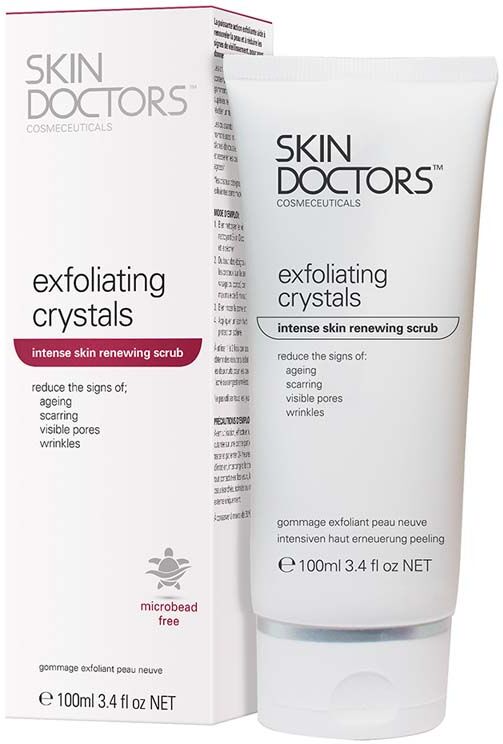
Skin Doctors Crystals 100mlSkin Doctors Exfoliating Crystals 100ml uses micro-dermabrasion and Hydroxy Acid exfoliation to boost skin's health and radiance. It works to boost dull and dreary looking skin effectively resurfacing the outer layer. The Intensive Mircro-Dermabraion Crystals work to break down the top layer of skin and gently exfoliate to smooth away any visible signs of ageing, pigmentation and scars. It promotes skin cell renewal and stimulates collagen to plump and refresh your complexion using Tea Tree Oil without scratching or damaging your skin. Microencapsulated beads – Rather than aluminum oxide (Corundum), these microencapsulated beads will give you all of the benefits of a powerful exfoliation, without harsh scratching or damage to your skin. Melaleuca alternifolia (Australian Tea Tree) Oil – Obtained from the leaves and branchlets of the Australian tree Melaleuca alternifolia, Tea Tree has antibacterial properties and has been shown to assist in the treatment of skin infections, including acne blemishes.15,97 £*Shipping: 2,95 £Secure redirect to the provider
-
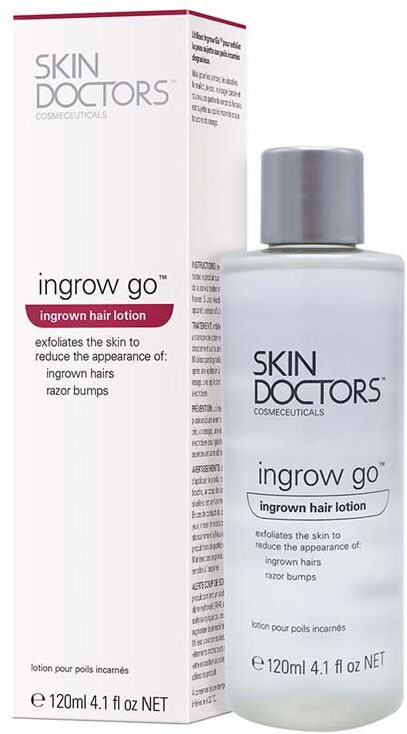
Skin Doctors Go 120mlSkin Doctors Ingrow Go is a skin treatment to eliminate ingrown hairs after hair removal by waxing or shaving. The skin treatment gently exfoliates the skin to smooth the skin and prevent ingrown hairs appearing. Isopropyl Alcohol - antibacterial to help clear out infected pores Propylene Glycol - to deliver moisture through the skin Acetylsalicylic Acid - anti-inflammatory to reduce the swelling associated with ingrown hairs Glycolic Acid - a mild exfoliant that removes dry skin cells and reduces redness11,24 £*Shipping: 2,95 £Secure redirect to the provider
-
Why is there a beta-1,4-glycosidic bond in lactose?
The beta-1,4-glycosidic bond in lactose is formed between the glucose and galactose molecules. This bond is important because it determines the structure and properties of lactose. The beta configuration of the glycosidic bond in lactose allows for the formation of a specific three-dimensional structure that is essential for its function as a disaccharide sugar found in milk. This bond also influences the way lactose is digested by the enzyme lactase in the human body. **
-
How do you draw trehalose in a 2-11 glycosidic bond?
To draw trehalose in a 2-11 glycosidic bond, you would first draw two glucose molecules connected by an alpha-1,1 glycosidic bond. Then, you would add another glucose molecule to the first glucose molecule in the 2 position, forming a 1,2 glycosidic bond. Finally, you would add the last glucose molecule to the second glucose molecule in the 1 position, forming a 2,1 glycosidic bond. This structure represents trehalose in a 2-11 glycosidic bond. **
-
How do you draw trehalose in a 2-11 glycosidic linkage?
To draw trehalose in a 2-11 glycosidic linkage, start by drawing two glucose molecules connected by an alpha-1,1 glycosidic bond. Then, draw another glucose molecule connected to the first glucose molecule in the pair by an alpha-1,2 glycosidic bond. This creates the 2-11 glycosidic linkage in trehalose. The resulting structure should show three glucose molecules connected in a linear fashion with the 2-11 glycosidic linkage between the first and third glucose molecules. **
-
What are the differences between an ester bond and glycosidic formation?
An ester bond is formed when a carboxyl group of one molecule reacts with a hydroxyl group of another molecule, resulting in the formation of an ester and the release of water. This type of bond is commonly found in lipids and is important for energy storage. On the other hand, glycosidic formation involves the bonding of a sugar molecule to another molecule, typically another sugar or an alcohol, through the reaction between the anomeric carbon of the sugar and a hydroxyl group of the other molecule. This type of bond is important for the formation of carbohydrates and is commonly found in polysaccharides such as starch and cellulose. **
* All prices are inclusive of VAT and, if applicable, plus shipping costs. The offer information is based on the details provided by the respective shop and is updated through automated processes. Real-time updates do not occur, so deviations can occur in individual cases. ** Note: Parts of this content were created by AI.